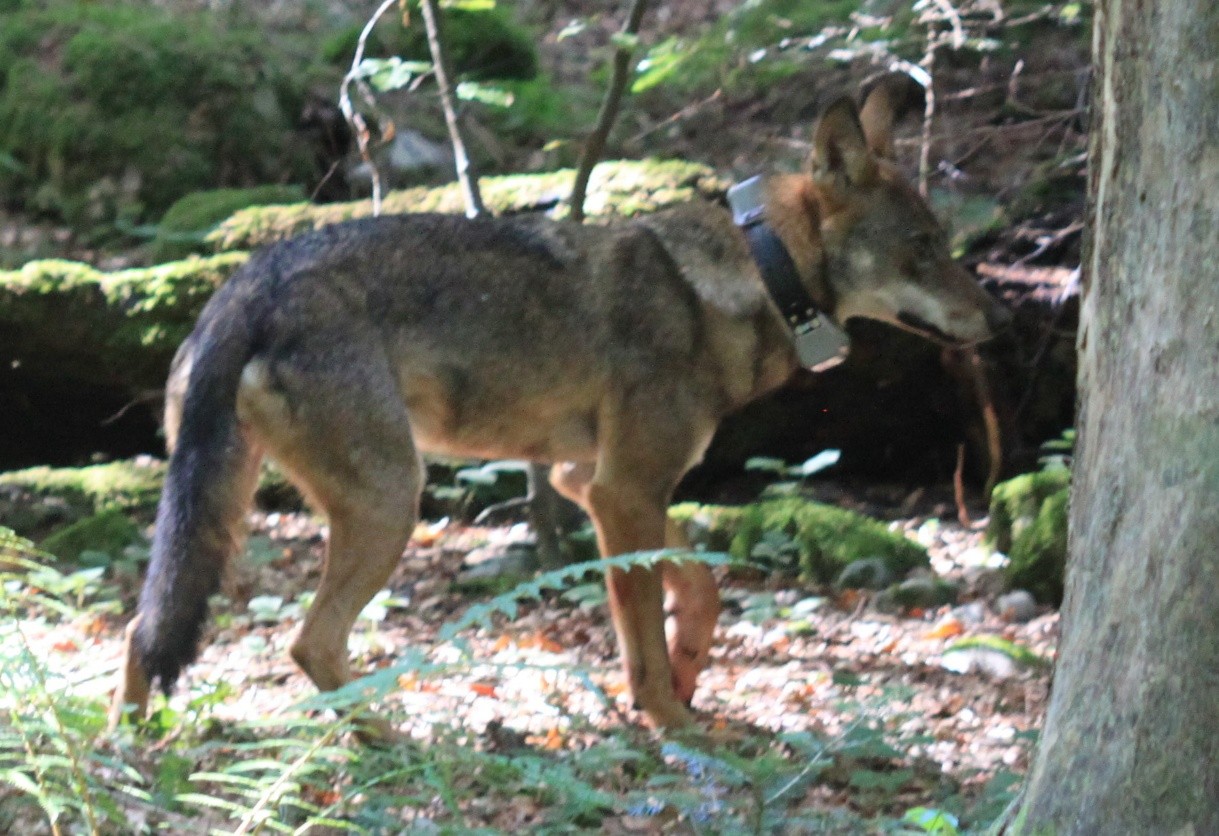
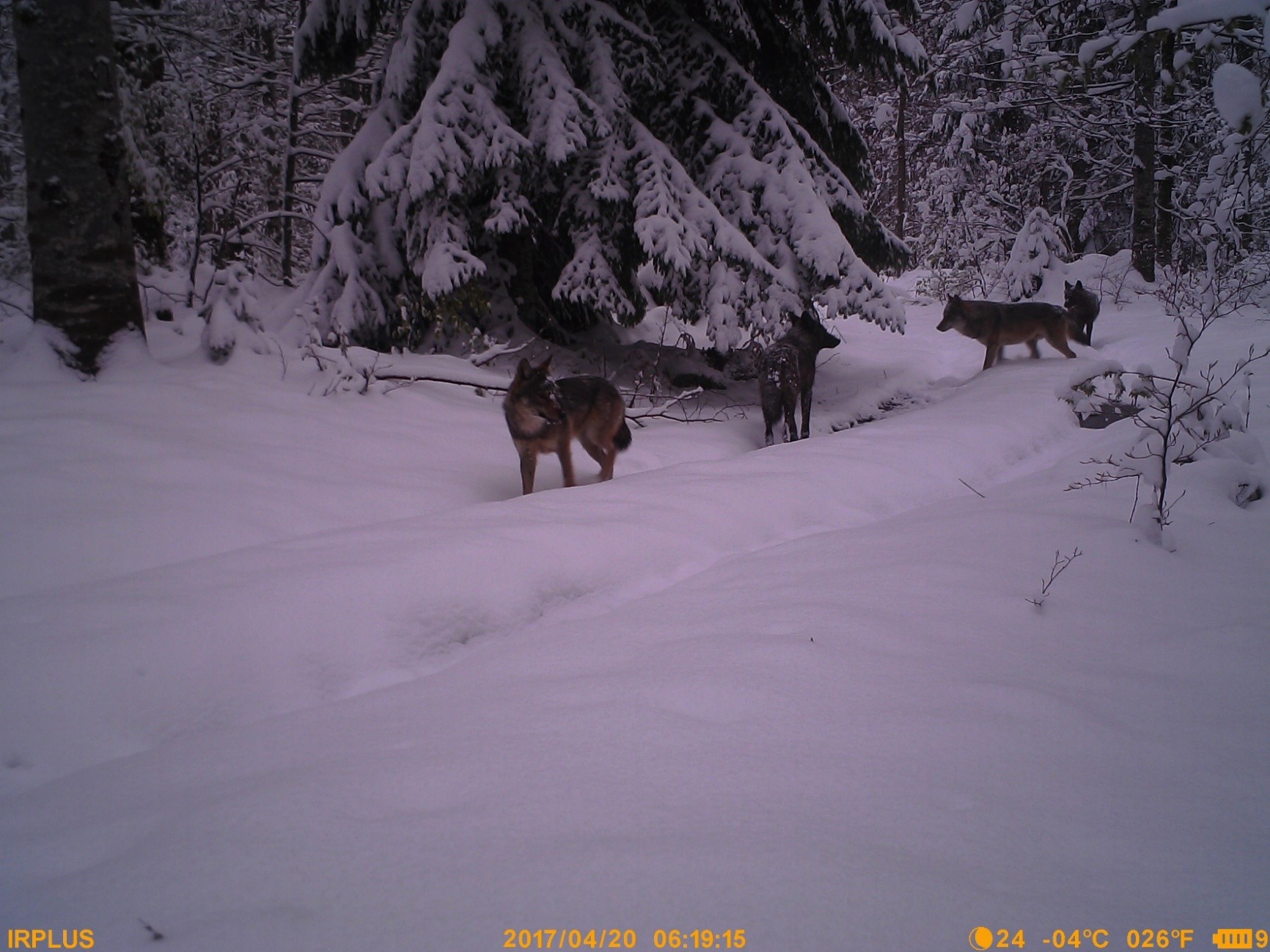
The spatial ecology of wolves in the Plitvice Lakes National Park area was investigated by monitoring their movements, space use, activity and abundance within and around the National Park from 2014 to 2021. The study was conducted in cooperation with the University of Zagreb Faculty of Veterinary Medicine, under the direction of project leader Professor Josip Kusak. This was the first study of its kind involving wolves in Plitvice Lakes National Park.
Wolf home-range size, pack territory size and activity were studied using GPS telemetry to track a total of nine wolves belonging to two neighbouring packs: the Mala Kapela pack and the Plješevica pack. The territories of the two monitored packs encompassed approximately 900 km² and included a substantial area around Plitvice Lakes National Park, extending to Mount Plješevica in the south-east and Mala Kapela in the north-west. Plitvice Lakes National Park is important as a breeding area for wolves and as a winter refuge. Snow tracking showed that a third pack from the Ličko Sredogorje area enters Plitvice Lakes National Park in winter and uses the western part of the Park. The average winter pack size across the three neighbouring packs was 5.6 wolves, while the average wolf density was 0.53 wolves per 100 km².
The wolves were most active at dawn and dusk. The passage of irregular migrants between 2018 and 2020 affected the wolves’ activity at dusk and during the night. This highlights the importance of minimising human disturbance, particularly in the most sensitive areas used by wolves to rear their young. Areas important for wolf reproduction were identified and mapped so that they could be incorporated into the future management of the National Park.