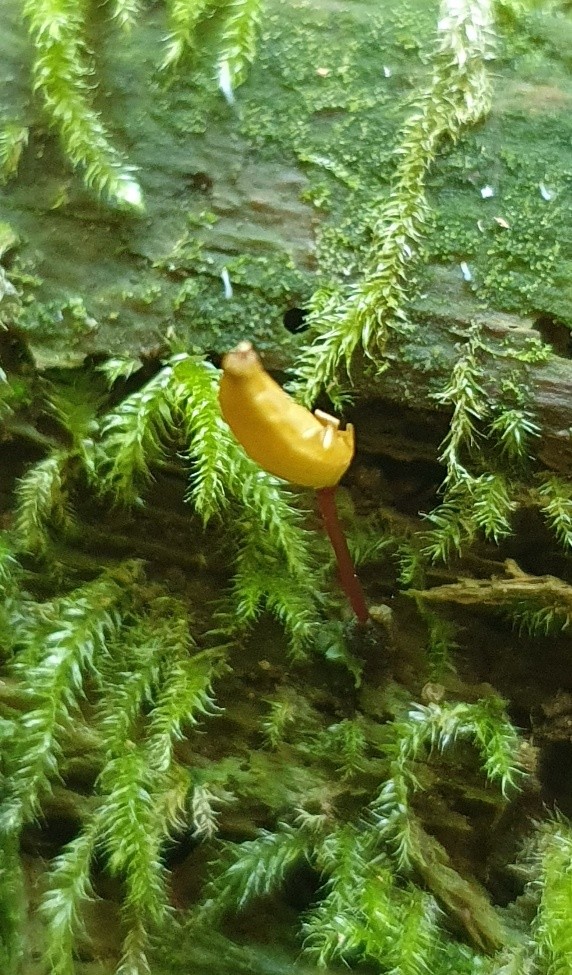
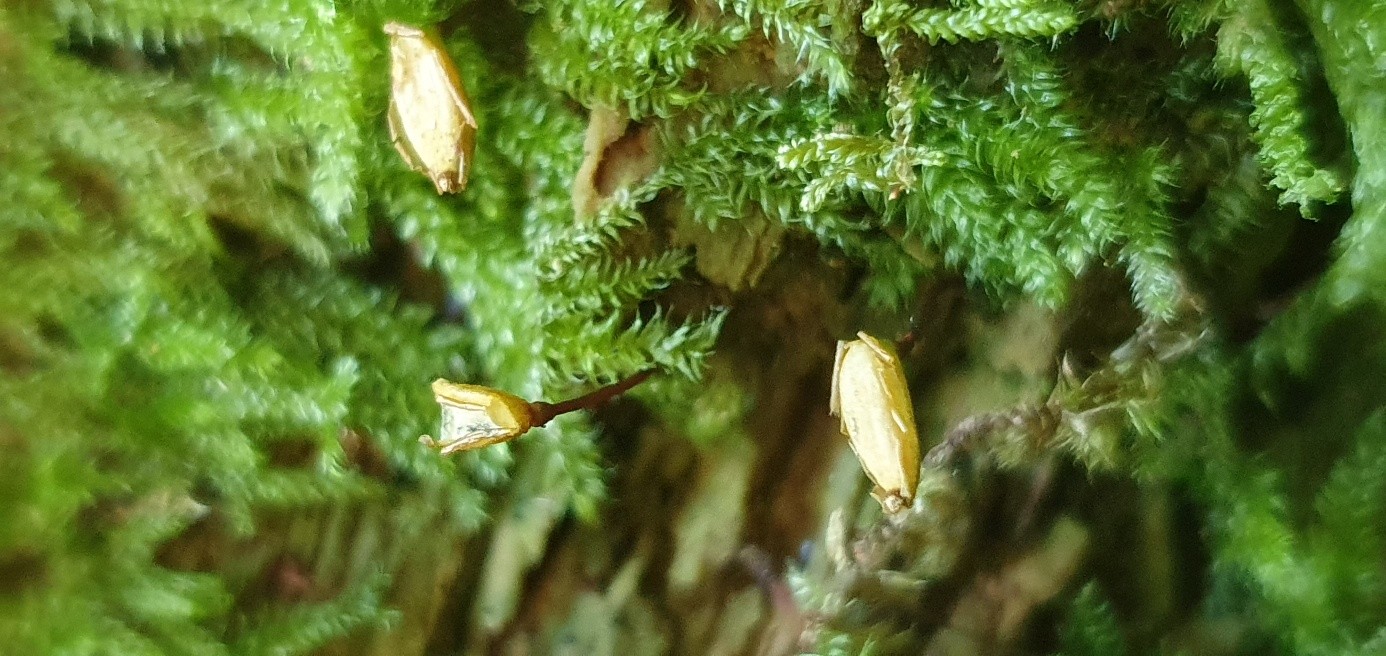
The survey and inventory of bryophytes in forest habitats was carried out in cooperation with the Croatian Forest Research Institute in Jastrebarsko and OIKON Ltd – Institute of Applied Ecology. It included a detailed inventory of bryophytes in forest habitats throughout Plitvice Lakes National Park, with particular emphasis on the Natura 2000 target species Buxbaumia viridis and Dicranum viride.
The purpose of the survey was to identify the species and spatial distribution of bryophytes in forest habitats and to develop a Park-wide bryophyte monitoring protocol, with particular emphasis on the Natura 2000 target species. It also aimed to provide recommendations for adapting management practices in order to maintain bryophyte species in a favourable conservation status.
The fieldwork was carried out from 2020 to 2023, focusing on the Natura 2000 target species. These species occur in natural forests or forests managed at low intensity, with a well-preserved microclimate and no exposure to atmospheric pollution. Their presence is therefore an indicator of the naturalness and undisturbed condition of forest habitats. The presence of Buxbaumia viridis indicates the naturalness of forest habitats through its association with deadwood, whereas Dicranum viride indicates naturalness through forest-habitat continuity and the absence of exposure to atmospheric pollutants.
The survey recorded 132 bryophyte species in the Park’s forests: 22 liverworts and 110 mosses. It also showed that the bryophyte flora varies between forest communities. Beech–fir and beech forests are the main centres of diversity, while thermophilous and moist forest communities have lower bryophyte diversity because of their more extreme ecological conditions.